
Piezosurgery
Piezosurgery is a young, particularly gentle surgical technique for processing bones that works on the basis of ultrasound and without a scalpel. The ultrasound waves transmitted by the ultrasound device only affect calcified (calcified) tissue such as bones or teeth. This significantly reduces the risk of injury to the surrounding sensitive structures such as soft tissue, nerves, and blood vessels. At the same time, the use of piezo ultrasound ensures that postoperative wound healing is accelerated.
Piezosurgery and dental fear
The piezosurgery procedure is so gentle and gentle that it is particularly suitable for anxious patients.
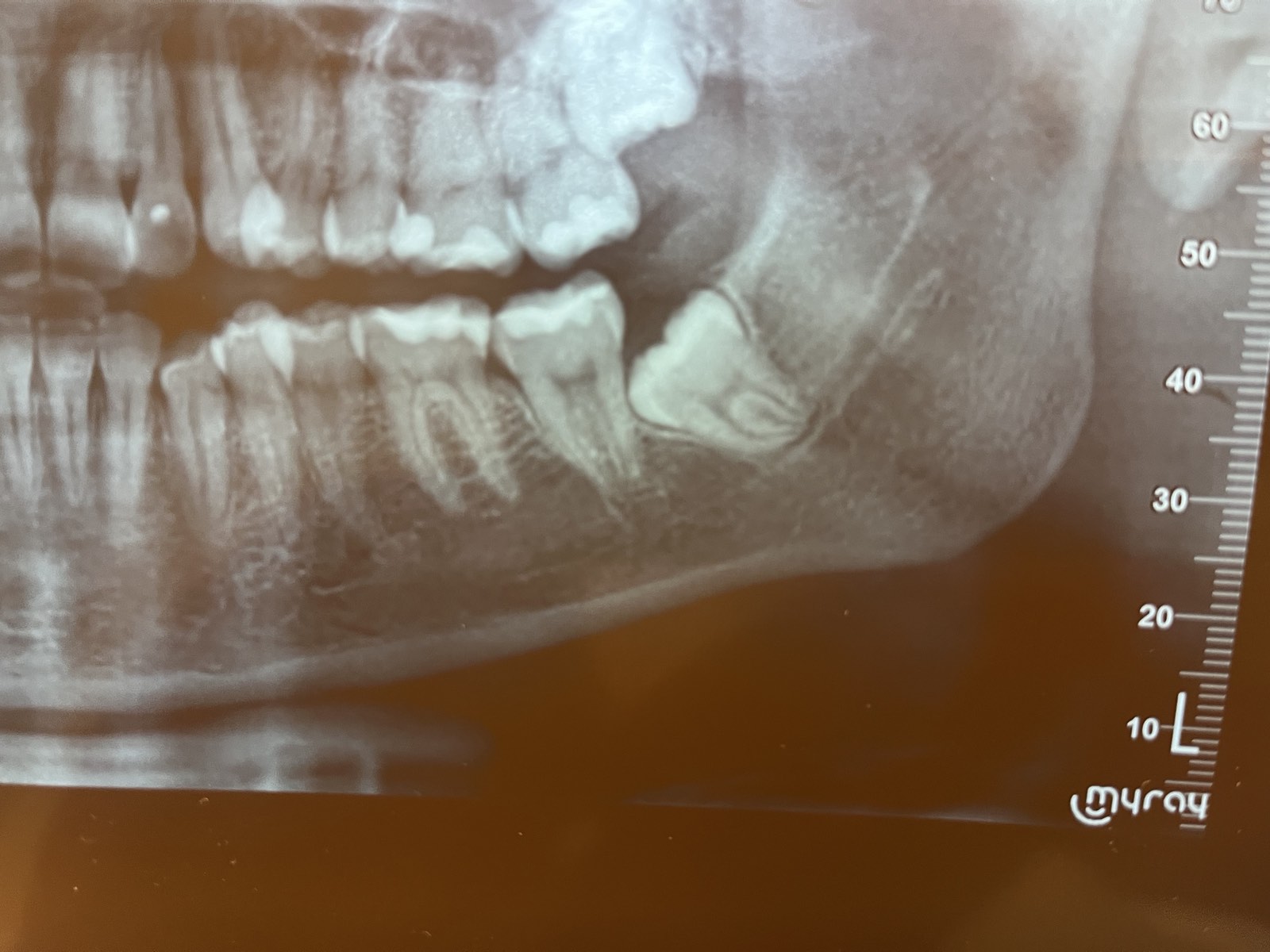
Impacted wisdom tooth

The extraction of the impacted wisdom tooth with the help of piezo surgery.
With the help of piezosurgery, the wisdom tooth was removed whole without requiring a traumatic osteotomy (splitting the tooth into parts). This reduced the work time; the patient felt comfortable during the extraction and had no swelling or pain.

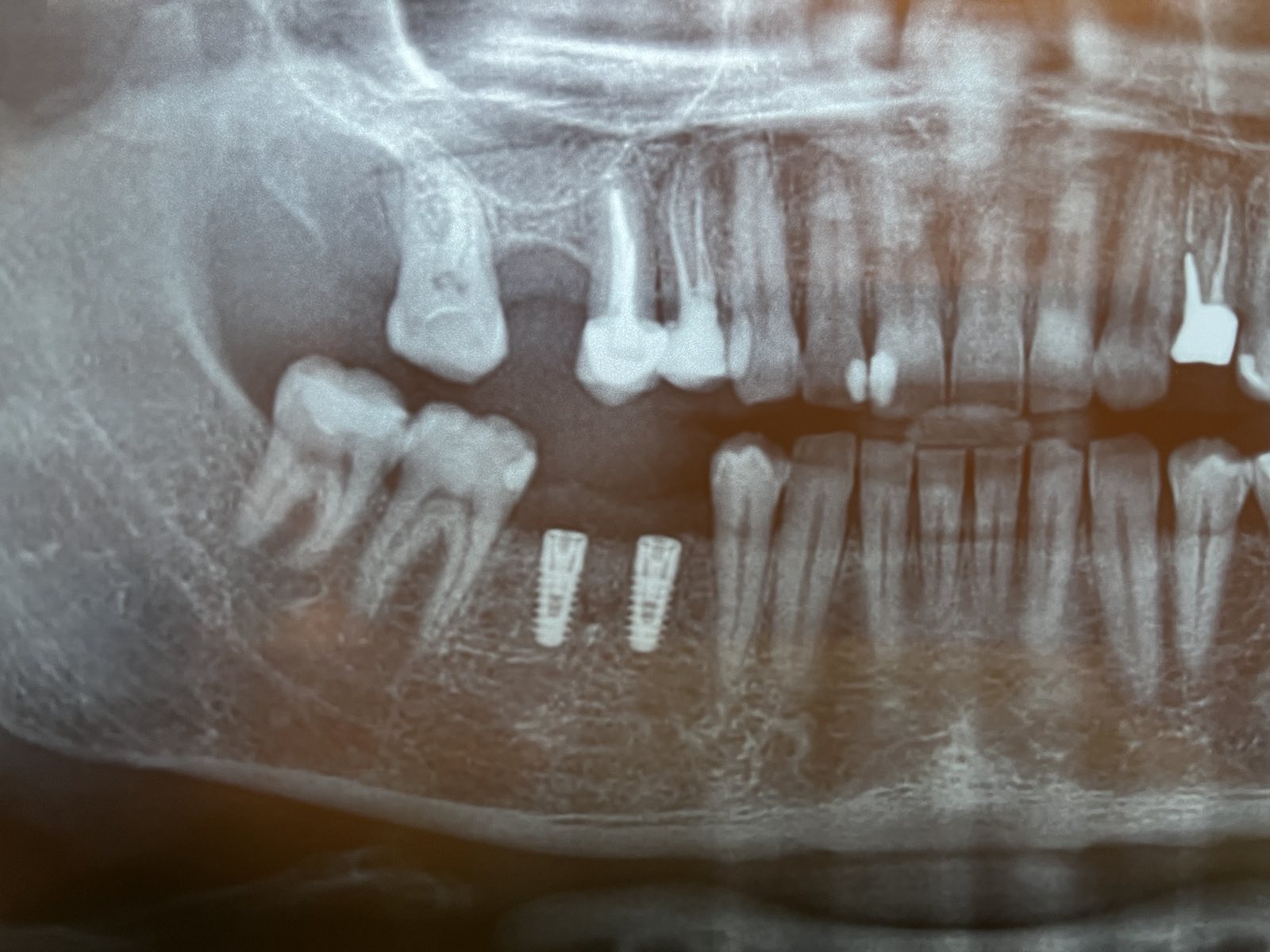
The implants were placed with bone material in the same visit as the extraction of the roots.
How does piezosurgery work?
The instruments used in piezo surgery are somewhat reminiscent of the handpieces of an ultrasonic toothbrush. They can be equipped with various attachments and thus perfectly adapted to the respective intended use. The ultrasound generator transmits the finest ultrasound vibrations to the “handpiece,” which gently removes the bone tissue. In most cases, piezosurgery eliminates the need for additional use of scalpels, drills, and surgical cutters.
The intensity of the ultrasound vibrations can be finely adjusted and can, therefore, be adjusted precisely to the density of the bone to be treated. Tissues with a different density, such as the surrounding soft tissue, nerves, and blood vessels, remain unaffected by the ultrasound waves.
Advantages and disadvantages of piezosurgery
Compared to the alternative to piezosurgery – bone processing with drills and cutters – piezosurgery is significantly gentler on the patient. It works precisely, reduces the risk of injury, and accelerates the healing process.
Piezosurgery is characterized by selective, precise cuts limited to the bone for bone removal and bone processing.
Piezosurgery makes it easier to work in areas that are difficult to access. Surrounding structures such as soft tissue, nerves, and blood vessels are spared.
The removal of bone material and bone transplant to compensate for bone loss can be limited to the actual need, thanks to the fine adjustment of the piezo device. This is why piezosurgery is very gentle on the tissue.
The selective and precise piezo method reduces postoperative pain and swelling.
Piezosurgery is very suitable for areas that are difficult to access.
Both the oral surgery dentist and his patients appreciate that piezo surgery works without pressure and the noise that is otherwise common in a dental practice. This is particularly important for anxiety patients.
The intensity of the ultrasound vibrations can be finely adjusted and can, therefore, be adjusted precisely to the density of the bone to be treated. Tissues with a different density, such as the surrounding soft tissue, nerves, and blood vessels, remain unaffected by the ultrasound waves.
When and where is piezosurgery used?
Ultrasound surgery is particularly suitable for use:
- During tooth removal
- In oral surgery for surgical tooth removal (wisdom tooth removal)
- In implantology (placement of dental implants)
- When building bone (e.g., during sinus lift/sinus lift procedure)
- In endodontics
- Oral surgery for root tip resections after root canal treatments.
Surgical crown lengthening
Surgical crown lengthening is used when a tooth up to the gum line has been completely or partially destroyed by caries. In these cases, there is not enough tooth structure to attach a crown with a tight edge to the remaining tooth. In order to gain more surface area for the tooth crown or crowning, the oral surgery dentist lengthens the crown of the remaining tooth by surgically exposing the root portion of the tooth using piezosurgery.
Implantology – preparation of the implant bed
Osteoplasty as part of periodontitis therapy
When the jawbone breaks down (e.g. as a result of periodontitis), bumps and niches often form in the bone. Osteoplasty, performed using gentle piezosurgery, smoothes the bone and returns the tooth to its natural shape. This makes it easier to care for the affected teeth and makes it more difficult for new bacterial plaque to build up. The osteoplasty method has certainly attracted criticism. Ultimately, periodontitis treatment aims to stop the bone loss associated with periodontitis (also known as periodontal disease). However, osteoplasty removes additional bone. The benefits of the treatment must be weighed up in each individual case.
Tooth extractions/removal of wisdom teeth
Piezosurgery enables the minimally invasive and bone-friendly removal of teeth or wisdom teeth. Protecting the jawbone during tooth extraction improves the conditions for later treatment with implants or alternative dentures.
Implantology – bone building/bone augmentation
Piezosurgery (ultrasound surgery) is very often used for gentle bone extraction in the context of implantology (for example, alveolar ridge elevation). To do this, the dental implant specialist removes bone chips from another part of the jaw or removes entire blocks of bone, for example, from the hip. He then attaches or transplants the bone replacement materials to the areas affected by bone loss. The separation of the jawbone necessary for this procedure is also called an osteotomy.
The cutting function of piezosurgery is also used to cut “bone windows” for the insertion of bone replacement material. The bone window method is primarily used for building bone in the lateral upper jaw (sinus lift). Sinus floor elevation using piezosurgery is considered a common and safe procedure among implantology specialists and oral surgery dentists.
Endodontics
During a root tip resection/root canal treatment, the dentist removes the tip of the tooth root deep in the bone along with the inflamed tissue. Surgical removal of the root tip is carried out when conventional root canal treatment has not produced the desired result.


Аn apparatus used in piezosurgery